

-
About
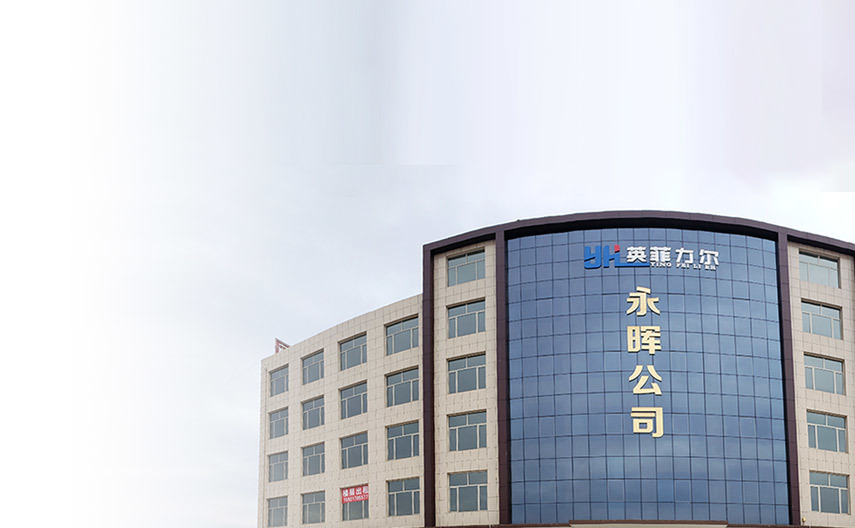
Hebei Yonghui Energy Saving Technology Co., Ltd. is a company integrating production and trade, established in August 2012. The company currently covers an area of over 21,000 square meters. It is located in the eastern part of Renqiu City. We are recruiting agents from various countries. The company has a strong professional technical team and a high-quality management team. The company currently has over 60 employees, including 8 management staff and 5 technical staff. We provide the best products at the best prices.
-

News
The company boasts a strong professional technical team and a high-quality management team. The company currently has over 60 employees, 8 managers, and 5 technical personnel. We offer excellent products at reasonable prices. We have a professional R&D team and a responsive sales team. Products have passed provincial inspections, all tests were passed, meeting industry standards.

What Importers Should Verify Before Sourcing Warm Edge Spacer for High-Performance Window Projects
2026-08
Buyers on high-performance window projects are asking harder technical questions. Here is the test data an importer should have on hand before quoting warm edge spacer — thermal conductivity, mechanical performance and EN 1279 documentation.
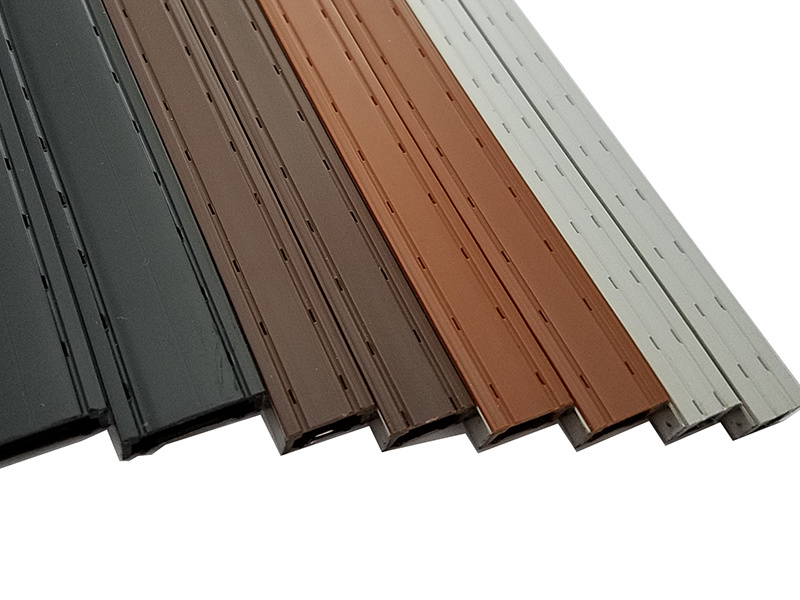
As window and façade projects chasing Passive House-level performance become more common across the industry, the questions coming from end buyers are getting more specific — and more technical. “What’s the thermal conductivity?” “Do you have third-party test data?” “Can this actually bring the window’s K-value down?” An importer fielding these questions without documentation on hand loses the deal to whoever can answer on the spot.
The number that actually matters: thermal conductivity
“Warm edge” is used loosely across the industry — the term alone proves nothing to a buyer who has been burned before. What actually matters is the tested thermal conductivity value.
Fiberglass warm edge spacer: 0.14 W/(m·K)
Standard aluminum spacer: approx. 160 W/(m·K)
Tested against JC/T 2453-2018 by an accredited third-party lab.
That difference at the glass edge is what allows a finished insulating glass unit to bring the overall window K-value down by 15%–30% compared with standard aluminum spacer — a figure worth having ready when a buyer asks how spacer choice affects their finished window’s rating.
Mechanical performance, independently tested
For buyers who ask about durability rather than thermal performance alone, we can provide independently tested figures — not factory specs, but numbers from a third-party lab report you can pass along:
- ISO 527-1:2019 — tensile strength, tensile modulus, strain at break
- ASTM D256-2024 — notched impact strength
- ISO 3146:2022 — melting point and heat resistance
Why the linear expansion question comes up
A common objection from experienced buyers: “Won’t a composite spacer expand differently than the aluminum frame around it and eventually fail?” It is a fair question — mismatched expansion rates are a real cause of IGU seal failure over time.
Our warm edge spacer’s coefficient of linear expansion is (2.5–3)×10-5 K-1, closely matched to aluminum’s 2.3×10⁻⁵ K-1 — close enough that thermal cycling does not create the detachment risk a mismatched material would.
What we can hand you to close the deal
For importers who need to substantiate claims to their own customers, we provide:
- EN 1279 compliance testing — moisture penetration and gas leakage rate, tested for European market requirements
- CNAS / CMA-accredited lab report against JC/T 2453-2018, covering thermal conductivity, bendability, crush resistance and UV / weathering resistance
- Independent mechanical property test reports — tensile, impact and heat resistance
If you are currently sourcing warm edge spacer and need documentation ready before you quote a high-performance window project, contact us and we will send the full report set.
Previous:

Hebei Yonghui Energy Saving Technology Co., Ltd.
Hebei Yonghui Energy Saving Technology Co., Ltd. is a company integrating production and trade, established in August 2012. The company currently occupies an area of more than 21,000 square meters. It is located in the east of Renqiu City.


Contact Information
whatsapp: +86 181 9425 1442